Introduction: The Enduring Appeal of Games
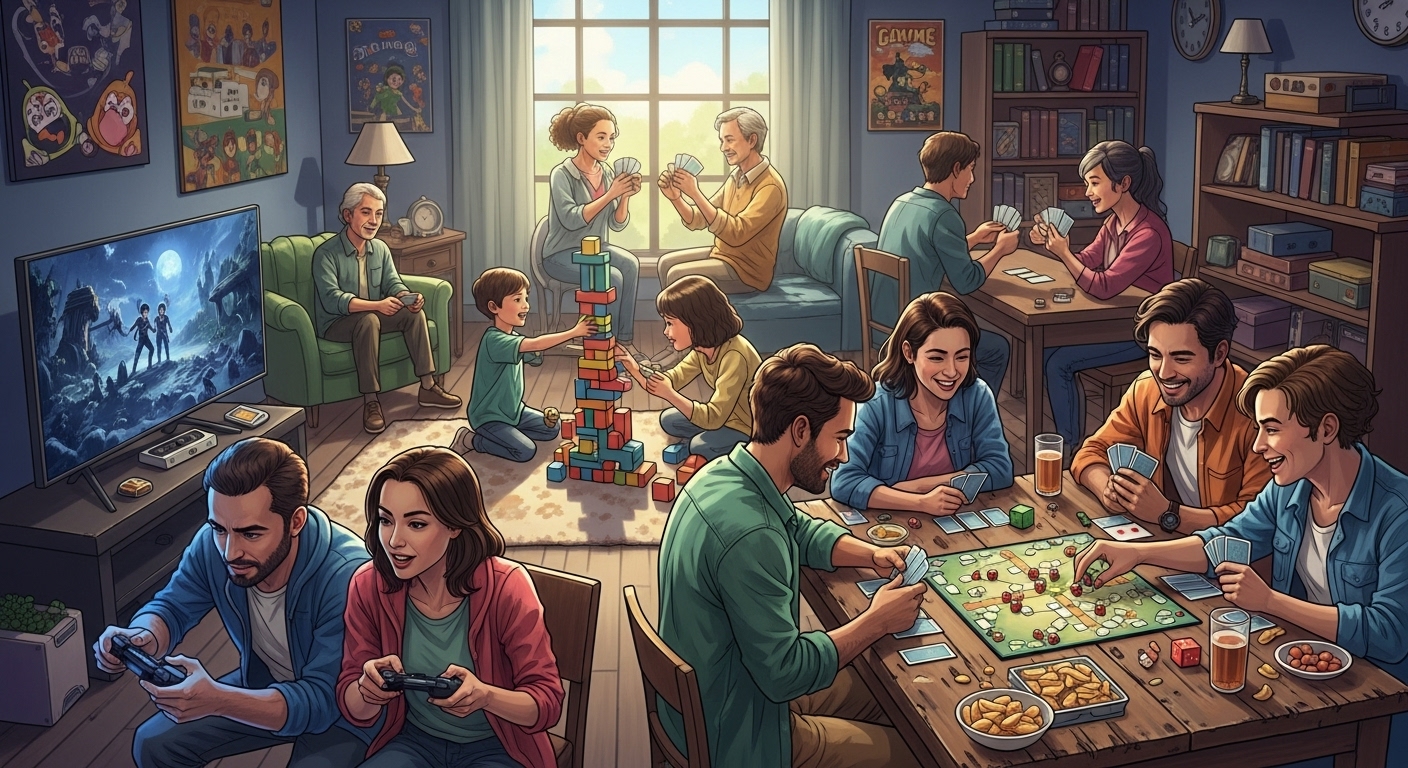
Games have been a cornerstone of human culture for millennia, evolving from simple tools of leisure to sophisticated digital experiences that shape entire industries. From ancient civilizations where games were a symbol of intellectual prowess to modern virtual environments where millions of players engage in competitive play, games have evolved in tandem with society. What makes them so universally appealing? The answer lies in the inherent nature of games—they offer challenge, escapism, entertainment, and social connection. Whether it’s the simplicity of a dice roll, the thrill of a competitive multiplayer match, or the immersion of an epic role-playing game (RPG), games continue to captivate us in ways no other form of entertainment can match.
This blog explores the history of games, their evolution, and how they have shaped our personal and social lives, as well as their growing influence on industries and technology.
The Origins of Gaming: From Ancient Play to Strategic Tools
The concept of games stretches back to ancient times, far before the advent of modern technology. Archaeologists have uncovered evidence of games like Senet in Egypt and Go in China, both of which were played thousands of years ago. These early games were not only forms of entertainment but also represented important social rituals and educational tools. For example, Senet was considered a game of chance, but it also had symbolic religious meanings, as it was associated with the journey of the soul through the afterlife.
Other ancient games, such as the strategy game Go, are still widely played today, demonstrating their enduring appeal. Go is celebrated for its depth and complexity, offering players a mental challenge that has remained timeless. Even in ancient societies, games were a way to demonstrate intellectual ability, engage in friendly competition, and form connections through play.
The Rise of Modern Gaming: From the Arcades to Home Consoles
The modern era of gaming truly began in the mid-20th century, when technology enabled the creation of video games. The first arcade games, such as Pong and Space Invaders, were simple yet groundbreaking, providing players with interactive digital experiences that were previously unheard of. These early games were a product of emerging technologies and became incredibly popular in public spaces like arcades. The appeal was clear: the fun of competition, the thrill of achieving a high score, and the interactive nature of the games made them irresistible.
As gaming technology advanced, so did the ambition behind game design. The 1980s saw the emergence of home gaming consoles such as the Atari 2600 and the Nintendo Entertainment System (NES). These systems brought gaming into the home, allowing people to enjoy arcade-like experiences without leaving their living rooms. This was a major shift in the industry, as it created an entirely new market for home entertainment. It was during this time that gaming’s cultural significance began to take shape, with iconic characters like Mario and Zelda becoming household names and influencing everything from pop culture to merchandise.
The 1990s brought even greater advancements in gaming technology, with the introduction of 3D graphics and more sophisticated gameplay mechanics. Consoles like the Sony PlayStation and the Sega Saturn allowed games to become more complex, offering deeper stories, improved graphics, and more engaging worlds. As a result, gaming evolved from a simple hobby to a legitimate cultural force.
The Online Revolution: Connecting Players Around the World
The introduction of the internet in the late 1990s was a game-changer for the industry. The ability to connect players across vast distances created a new dimension of gaming, where people could compete or cooperate in real-time, regardless of their physical location. This shift gave rise to massively multiplayer online games (MMOs) and online multiplayer modes that allowed players to enter virtual worlds with others. Games like World of Warcraft, Counter-Strike, and Halo became global sensations, thanks to their online multiplayer capabilities.
These games offered something that traditional single-player games could not: social interaction. Online gaming allowed players to form communities, make friends, and engage in collective activities such as team-based competitions or cooperative missions. The social aspect of gaming became as important as the gameplay itself, and virtual communities began to form around popular titles. Players could join guilds, form alliances, or even compete in organized tournaments. The rise of esports, a professional competitive gaming industry, further solidified the idea that gaming was not only a pastime but also a legitimate career option for many players.
The Mobile Revolution: Games for Everyone
As smartphones became ubiquitous in the 2000s, mobile gaming emerged as a dominant force in the industry. The portability of mobile devices made gaming accessible to an even broader audience. People could now enjoy their favorite games during their daily commute, waiting in line, or even during short breaks at work. Mobile gaming’s accessibility and ease of use played a huge role in making gaming a mainstream activity.
The simplicity and ease of play that mobile games offered allowed developers to create titles that appealed to a wide range of players. Casual games like Candy Crush Saga and Angry Birds became global phenomena, bringing gaming to people who had never considered it before. These games were designed to be simple, fun, and easy to pick up and put down—perfect for people who had limited time for gaming but still wanted to engage in short bursts of play.
The success of mobile gaming also spurred the development of more complex titles for mobile devices. Games like Clash of Clans, Pokémon GO, and Fortnite demonstrated that mobile gaming could also support deep gameplay mechanics, strategy, and social interaction. Today, mobile gaming continues to grow, with billions of dollars in annual revenue and a massive global user base.
The Social and Cultural Impact of Gaming
Gaming has always been a social activity, but in recent years, it has become a central part of modern culture. Video games are now one of the most popular forms of entertainment, rivaling movies, television, and music in terms of global reach and influence. The rise of streaming platforms like Twitch and YouTube has allowed gamers to share their experiences with audiences around the world, creating a new form of entertainment where viewers watch others play games, learn strategies, or simply enjoy their personalities.
Gaming has also had a significant impact on other industries. Video games have influenced film, television, and literature, with many popular franchises spawning movies, books, and even merchandise. The storytelling aspect of many games has become more sophisticated, often rivaling the quality of traditional media. Games like The Last of Us and Red Dead Redemption have set new standards for narrative depth and emotional engagement, showing that video games can be as powerful a storytelling medium as film or literature.
Moreover, gaming has provided a platform for important social conversations. Games like Life is Strange and The Walking Dead explore complex themes such as mental health, social justice, and survival, prompting players to reflect on real-world issues. The growing diversity of characters, stories, and creators in the gaming industry also ensures that gaming remains an inclusive and evolving medium.
The Future of Gaming: Virtual Reality, AI, and Beyond
As technology continues to evolve, the future of gaming holds incredible potential. One of the most exciting developments is the rise of virtual reality (VR) and augmented reality (AR), which promise to take gaming to new levels of immersion. VR headsets like the Oculus Rift and PlayStation VR are already allowing players to step inside virtual worlds, offering an unprecedented level of interaction and realism.
In addition to VR, artificial intelligence (AI) is playing an increasingly important role in game development. AI is being used to create more realistic non-playable characters (NPCs), dynamic worlds, and personalized gameplay experiences. Games are becoming smarter, with the ability to adapt to a player’s behavior, choices, and skill level. The result is a more engaging and customized gaming experience that feels alive and responsive.
The growth of cloud gaming and 5G technology is also set to revolutionize the way games are played and distributed. With cloud gaming, players will no longer need powerful hardware to run complex games—everything will be streamed directly to their devices. This makes high-quality gaming more accessible and opens up new possibilities for developers to create expansive worlds that are always online and constantly evolving.
The Positive Impact of Gaming on Cognitive Development
Gaming offers more than just entertainment—it can also be a tool for learning and cognitive development. Studies have shown that certain types of games, such as puzzles, strategy games, and action titles, can improve problem-solving skills, decision-making, and hand-eye coordination. Games often require players to think critically, analyze situations, and make decisions under pressure. These skills can translate into real-world applications, whether in school, work, or daily life.
Games that focus on storytelling and world-building can also enhance creativity and imagination. Many players are drawn to the worlds within games like Minecraft, Skyrim, and The Elder Scrolls Online because of the freedom they offer in shaping and creating content. This kind of play encourages exploration and innovation, allowing players to think outside the box and express themselves in unique ways.
Conclusion: The Unstoppable Force of Games
Games have come a long way since their humble beginnings. From ancient pastimes to the cutting-edge virtual worlds of today, games continue to capture our hearts and minds, offering more than just entertainment. They have become a central part of our culture, our social lives, and even our cognitive development. As technology continues to advance, the future of gaming looks brighter than ever, with new innovations on the horizon that promise to push the boundaries of what games can be. Whether for entertainment, education, or social connection, games will continue to play a central role in shaping our world for years to come.