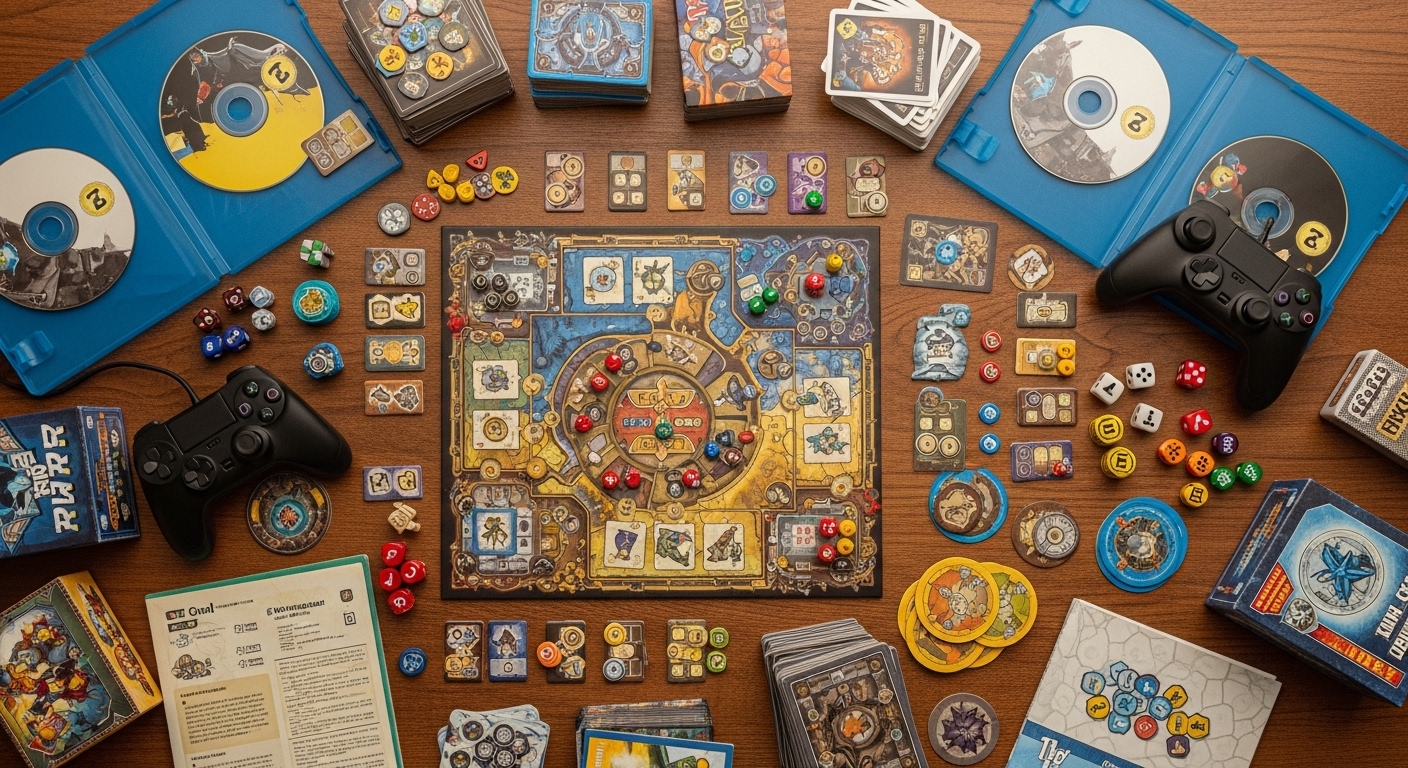

Gaming, once a niche hobby, has transformed into one of the largest forms of entertainment in the world. From early arcade games to the vast, interconnected virtual worlds we explore today, the gaming industry has gone through massive changes. But what exactly fueled this transformation? In this blog post, we’ll dive deep into the history of gaming, examining its evolution, the technological advancements that shaped it, its cultural impact, and what the future of gaming might look like.
The Humble Beginnings: The Birth of Video Games
The journey of gaming began in the mid-20th century, a time when computers were a rare and expensive commodity. The first instances of video games were experimental projects developed by scientists and engineers, with no real market or commercial intentions behind them. One of the earliest examples is Tennis for Two, created in 1958 by physicist William Higinbotham. This rudimentary game simulated a tennis match on an oscilloscope, marking the first-ever appearance of interactive gameplay.
However, the game that truly sparked the commercial gaming revolution was Pong (1972). Developed by Atari’s founder, Nolan Bushnell, Pong was an arcade game that simulated table tennis. With its simple mechanics and competitive play, it became an instant hit, creating a massive market for arcade games and sparking the birth of the video game industry as we know it. The success of Pong led to the creation of many other early arcade games, such as Space Invaders (1978), Asteroids (1979), and Pac-Man (1980), which became pop culture phenomena.
The Golden Age of Arcade Games
The 1980s marked what many consider to be the “Golden Age” of arcade gaming. During this period, arcade machines were ubiquitous—found in movie theaters, shopping malls, and convenience stores. The simplicity of these games, combined with their addictive mechanics, captured the attention of millions of players worldwide.
Games like Space Invaders introduced the concept of high scores, which drove players to keep playing and competing. Pac-Man revolutionized game design by introducing a character-driven narrative and non-violent gameplay that appealed to a wider audience, including women. Other iconic titles such as Donkey Kong (1981) and Galaga (1981) helped solidify arcade gaming as the dominant form of entertainment during the decade. The success of arcade games also contributed to the rise of gaming culture, with players forming communities, exchanging strategies, and hosting high-score competitions.
Despite the surge in popularity, arcade gaming faced a significant challenge in the early 1980s—a market crash. The video game crash of 1983, caused by an oversaturation of low-quality games, led to the decline of the arcade gaming market and the industry as a whole. This was a pivotal moment in gaming history, but it wasn’t the end.
The Rise of Home Consoles: Gaming Becomes Personal
After the arcade crash, the video game industry entered a period of transformation. Enter home consoles. With the release of the Atari 2600 in 1977, followed by the Nintendo Entertainment System (NES) in 1985, home consoles made gaming more accessible than ever before. While early consoles like the Atari 2600 brought home arcade experiences, it was the NES that truly revolutionized gaming at home.
Nintendo’s NES became the most successful home console of its time, thanks to its expansive library of high-quality games. Super Mario Bros. (1985), The Legend of Zelda (1986), and Metroid (1986) all debuted on the NES and became foundational titles for modern gaming. Super Mario Bros., in particular, introduced side-scrolling platformer mechanics, which became one of the most influential genres in gaming history. It was not just about playing games at home; it was about creating experiences that were as engaging, if not more so, than arcade games.
The success of the NES paved the way for other companies to enter the home console market. Sega, with its Sega Genesis (1988), and later Sony with the PlayStation (1994), brought new innovations to the gaming world. The 16-bit era, epitomized by Sega Genesis and Super Nintendo Entertainment System (SNES), introduced more sophisticated graphics, a wider range of game genres, and more immersive gameplay.
The 3D Revolution: The Next Step in Gaming
The 1990s were a game-changer for the gaming industry. The most significant development of this era was the introduction of 3D graphics. Early games were limited to 2D environments, with sprites and basic backgrounds. However, as computing power increased, game developers were able to create more complex and visually appealing 3D worlds.
One of the first major 3D games was Doom (1993), a first-person shooter that introduced players to 3D environments and the concept of multiplayer deathmatches. Doom was a breakthrough, offering fast-paced action and multiplayer capabilities through local networks. Quake (1996), another game developed by id Software, further advanced 3D graphics and multiplayer gameplay, cementing the genre’s place in gaming history.
At the same time, consoles were adopting 3D graphics as well. Sony’s PlayStation, released in 1994, was a major milestone in gaming history. It brought iconic titles like Final Fantasy VII (1997), Gran Turismo (1997), and Metal Gear Solid (1998) to the forefront. These games featured expansive 3D environments, engaging narratives, and groundbreaking gameplay, pushing the boundaries of what was possible in video games.
Nintendo also embraced 3D with the release of the Nintendo 64 in 1996. Games like Super Mario 64 (1996) and The Legend of Zelda: Ocarina of Time (1998) redefined the concept of open-world exploration and player freedom, setting the bar for future games.
The Rise of Online Multiplayer and the Modern Gaming Landscape
The early 2000s saw the growth of online gaming. With the widespread availability of broadband internet, gamers could now connect to others from around the world, creating a new social dimension to gaming. Titles like StarCraft (1998) and Counter-Strike (1999) laid the foundation for online multiplayer gaming, with large-scale player-versus-player (PvP) battles becoming a staple of the gaming experience.
However, it wasn’t until the launch of Xbox Live in 2002 and PlayStation Network in 2006 that online gaming truly entered the mainstream. These services allowed gamers to play with or against others across the globe, and they became central to the appeal of consoles in the 2000s.
At the same time, new gaming genres emerged. First-person shooters (FPS), massively multiplayer online role-playing games (MMORPGs), and battle royale games began to dominate the gaming scene. World of Warcraft (2004) became one of the most successful MMORPGs, attracting millions of subscribers to its virtual world. Halo 2 (2004) and Call of Duty 4: Modern Warfare (2007) brought competitive FPS gaming to new heights, creating a global community of gamers who connected through multiplayer modes.
The Impact of Mobile Gaming: Gaming on the Go
In the 2010s, the rise of smartphones led to another revolution in gaming—mobile gaming. Thanks to the power of mobile devices like the iPhone and Android phones, gaming became more portable than ever. Games like Angry Birds (2009) and Candy Crush Saga (2012) introduced millions of casual players to the world of gaming, and mobile gaming quickly grew into a multi-billion-dollar industry.
Unlike traditional console or PC gaming, mobile games could be downloaded and played in a matter of seconds, making them ideal for short bursts of entertainment. Mobile gaming’s accessibility and ease of play attracted a broad audience, from children to adults. Moreover, free-to-play games with in-app purchases became a common business model, allowing developers to reach even larger audiences while monetizing their games.
While some might dismiss mobile games as simple or casual, the platform has proven to be a breeding ground for innovation. Games like Clash Royale (2016) and PUBG Mobile (2018) brought complex multiplayer mechanics to mobile devices, while augmented reality games like Pokémon GO (2016) redefined what it means to interact with a game.
The Future of Gaming: Virtual Reality and Beyond
The future of gaming is being shaped by new technologies, and one of the most exciting advancements is virtual reality (VR). With VR, players can immerse themselves in entirely new worlds, experiencing games in a way that was previously unimaginable. Headsets like the Oculus Rift, HTC Vive, and PlayStation VR have brought VR gaming to the forefront, allowing players to interact with digital environments using motion controllers and immersive visuals.
Games like Half-Life: Alyx (2020) and Beat Saber (2018) are prime examples of how VR can offer players unique, interactive experiences. As VR technology continues to improve, it’s expected that more game developers will embrace VR as a primary way to deliver immersive and engaging experiences.
In addition to VR, augmented reality (AR) is also gaining momentum. AR overlays digital objects in the real world, allowing players to interact with virtual elements in real-time. Pokémon GO was just the beginning of what’s possible with AR gaming, and we can expect more innovative AR games in the future.
The integration of artificial intelligence (AI) into games also promises to revolutionize the way we play. AI-powered characters and systems can create dynamic, responsive gameplay experiences, where each playthrough feels unique. This could open up new possibilities for storytelling, procedural generation, and player interaction.
The Social and Cultural Influence of Gaming
Gaming’s influence extends far beyond just entertainment. Video games have become a global cultural phenomenon, shaping everything from social interactions to art and storytelling. Esports, for instance, has turned competitive gaming into a legitimate career for many professional players. Tournaments like The International (Dota 2) and League of Legends World Championships attract millions of viewers and feature multi-million-dollar prize pools.
Moreover, gaming has become a shared social experience. Online multiplayer games like Fortnite (2017), Minecraft (2011), and Among Us (2018) have fostered strong communities where players can interact, cooperate, and compete with others from around the world. Video games are now one of the most significant social spaces for people to connect, regardless of physical distance.
Games are also being recognized as a legitimate form of artistic expression. Titles like The Last of Us (2013), Red Dead Redemption 2 (2018), and The Legend of Zelda: Breath of the Wild (2017) showcase the emotional depth, storytelling, and artistry that video games are capable of achieving. As the industry grows, we can expect even more games to push the boundaries of what it means to tell a story.
Conclusion: Gaming’s Bright Future
From its humble beginnings in arcades to the immersive worlds of virtual reality, gaming has come a long way. What started as a simple pastime has evolved into a global industry with a massive cultural and social impact. The future of gaming is brighter than ever, with advancements in VR, AI, and AR opening up new possibilities for interactive and immersive experiences.
As technology continues to evolve and the industry grows, gaming will remain an essential part of our cultural landscape. Whether it’s through competitive esports, casual mobile games, or groundbreaking VR experiences, the world of gaming is just beginning to explore its true potential. The journey of gaming is far from over, and it’s an exciting time to be part of it.