
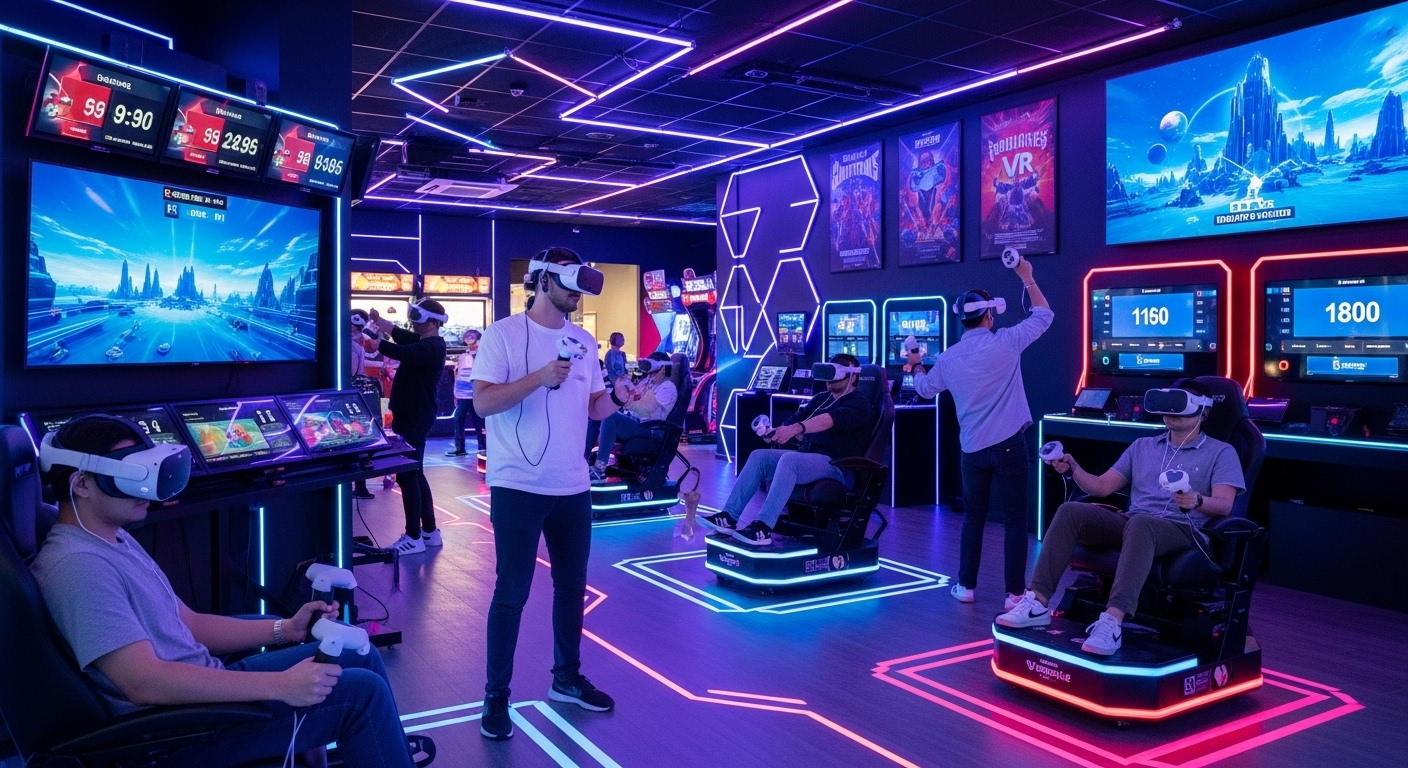
Virtual reality has often been described as the technology of the future, a medium capable of transporting people into entirely new worlds. For decades, it was more of a dream than a reality, hampered by high costs, bulky equipment, and limited applications. However, in the last decade, virtual reality—commonly referred to as VR—has made enormous strides. From immersive games to virtual tourism, it is changing the way people interact with digital content. One of the most fascinating developments in this field has been the emergence of virtual reality arcades, spaces where people can experience VR in a communal, accessible, and highly engaging environment.
Virtual reality arcades are reimagining the traditional gaming arcade experience by using cutting-edge technology to provide visitors with access to VR equipment, games, and simulations that are often too expensive or complex to set up at home. These arcades have become cultural hubs in many cities around the world, combining entertainment, social interaction, and technology into a single experience. In this article, we will explore the rise of VR arcades, the reasons behind their popularity, the challenges they face, and their future potential.
The Origins of VR Arcades
Although virtual reality as a concept dates back decades, the idea of VR arcades is relatively new. Early attempts at VR in the 1980s and 1990s involved clunky headsets and rudimentary graphics that were far from the immersive experiences promised by science fiction. Some pioneering companies attempted to create arcade-style VR experiences, but the technology of the time was too limited to capture mainstream attention.
The modern rise of VR arcades began in the mid-2010s, coinciding with the release of more advanced VR headsets like the Oculus Rift, HTC Vive, and PlayStation VR. These devices finally delivered on the promise of immersion, with high-resolution visuals, accurate motion tracking, and expansive libraries of VR content. However, the cost of the equipment, combined with the need for powerful computers, made it difficult for many consumers to enjoy these experiences at home. VR arcades filled this gap by offering shared access to state-of-the-art technology in public venues.
Why VR Arcades Gained Popularity
Several factors contributed to the rapid rise of virtual reality arcades.
First, accessibility has been a major driver. VR equipment is still expensive, and many people are hesitant to invest in a headset and the required hardware without first experiencing what VR has to offer. Arcades allow people to sample the technology at a fraction of the cost, making it more approachable and less intimidating.
Second, VR arcades tap into nostalgia for traditional gaming arcades. Just as arcades in the 1980s and 1990s gave players access to hardware they could not afford at home, VR arcades provide access to cutting-edge technology in a social environment. The shared experience of visiting an arcade, trying different games, and competing or collaborating with friends adds to the appeal.
Third, VR arcades provide experiences that are difficult or impossible to replicate at home. Many arcades feature large open spaces equipped with advanced motion tracking, haptic feedback suits, or multiplayer setups that allow groups of people to explore virtual environments together. These experiences go far beyond what most home setups can offer, making arcades a destination for both casual visitors and dedicated gamers.
Finally, the novelty factor has played an important role. Virtual reality is still a relatively new technology for many people, and VR arcades provide an easy entry point. Word of mouth, social media sharing, and the sheer uniqueness of the experience have all helped fuel their popularity.
The Role of VR Content in Arcades
The success of a VR arcade depends heavily on the content it offers. Unlike home gaming, where players may be satisfied with long, story-driven experiences, arcade visitors often prefer short, intense, and easily accessible games. VR arcades have catered to this demand by focusing on experiences that provide instant thrills, whether through fast-paced shooters, rhythm games, or virtual sports.
Popular VR arcade titles include zombie survival games, space exploration adventures, and immersive puzzle experiences. Rhythm-based games that use motion controllers have been especially successful because they are easy for newcomers to understand and enjoy. Multiplayer VR games are also central to arcades, as they allow groups of friends or strangers to play together, enhancing the social aspect of the experience.
Arcades have also diversified their content to attract wider audiences. Some venues offer VR experiences beyond gaming, such as virtual roller coasters, educational simulations, and artistic explorations. These options broaden the appeal of VR arcades, making them suitable for families, tourists, and even corporate events.
The Social Element of VR Arcades
One of the most distinctive aspects of VR arcades is their social nature. Unlike home VR setups, which are often solitary experiences, arcades bring people together. Visitors can watch others play, cheer them on, and share the excitement. Multiplayer experiences amplify this effect, turning VR gaming into a collaborative adventure.
This social element helps VR arcades stand out in an era where much of gaming is online and remote. Being physically present in the same space, laughing, competing, and working together creates bonds that online interactions cannot fully replicate. For many visitors, the communal atmosphere is as important as the technology itself.
VR Arcades and Esports
Another reason VR arcades are rising in popularity is their connection to esports. Competitive gaming has become a massive global industry, and VR is beginning to carve out its niche within it. Arcades provide the perfect setting for VR esports tournaments, offering standardized equipment, professional setups, and a built-in audience.
Events like VR League competitions and arcade-hosted tournaments demonstrate the potential of VR as a spectator sport. With games that are visually engaging and physically active, VR esports bring a new dimension to competitive gaming. VR arcades are often the breeding grounds for this emerging trend, giving players the chance to train and compete in a supportive environment.
The Business Model of VR Arcades
Running a VR arcade involves unique challenges and opportunities. The business model typically relies on charging customers for time-based sessions, where players pay for 30 minutes or an hour of VR access. Some arcades also offer memberships, group packages, or event hosting for birthdays, team-building activities, and school trips.
The high cost of VR equipment makes arcades a practical solution for consumers, but it also means operators must carefully manage expenses. Headsets, motion controllers, and powerful PCs require regular maintenance, updates, and replacements. Ensuring hygiene and safety is also critical, as headsets are shared among many users.
Despite these challenges, many VR arcades thrive by offering unique experiences, maintaining strong customer service, and constantly updating their content libraries. By creating an atmosphere that is both welcoming and futuristic, they attract repeat visitors and word-of-mouth referrals.
Challenges Facing VR Arcades
While the rise of VR arcades is impressive, the industry faces several challenges.
One major obstacle is the cost of equipment. Although VR technology has become more affordable over time, maintaining a fleet of high-end headsets, PCs, and accessories is still expensive. Operators must also account for the cost of renting space, staffing, and marketing.
Another challenge is the rapid pace of technological change. VR is evolving quickly, and arcades must keep up with the latest hardware and software to remain competitive. Falling behind risks losing customers who expect cutting-edge experiences.
Health and safety concerns also pose challenges. Extended VR use can cause motion sickness for some players, and hygiene is an ongoing issue when sharing headsets among many users. Arcades must implement strict cleaning protocols and ensure player comfort to maintain trust.
Finally, competition from home VR setups is increasing. As consumer VR equipment becomes more affordable and accessible, some players may prefer to enjoy the technology at home. Arcades must differentiate themselves by offering larger-scale, multiplayer, or unique experiences that cannot easily be replicated in a living room.
The Impact of the COVID-19 Pandemic
The global pandemic had a significant impact on VR arcades, as it did on many industries reliant on physical gatherings. Social distancing measures, lockdowns, and concerns about hygiene made it difficult for arcades to operate. Many venues had to close temporarily or permanently.
However, the pandemic also highlighted the value of shared experiences once restrictions eased. As people sought out entertainment outside their homes, VR arcades saw a resurgence in interest. Operators adapted by implementing stricter sanitation protocols, offering private bookings, and highlighting the safety of their equipment. The crisis accelerated innovation and forced arcades to rethink their business models, ultimately making the industry more resilient.
The Future of VR Arcades
The future of VR arcades looks promising, especially as VR technology continues to evolve. Advances in wireless headsets, improved motion tracking, and lighter equipment will make VR more comfortable and accessible for arcade settings. Innovations like haptic feedback suits and full-body tracking promise even more immersive experiences that go beyond what home users can typically access.
VR arcades may also integrate with other emerging technologies. Mixed reality, augmented reality, and artificial intelligence could expand the range of experiences available. Imagine an arcade where players can seamlessly transition between VR and AR, or where AI tailors experiences to individual preferences.
As esports continues to grow, VR arcades may become important venues for training and competition, hosting both local and international events. Their role as community hubs will likely expand, offering not only gaming but also educational programs, creative workshops, and virtual travel experiences.
Conclusion
The rise of virtual reality arcades represents a fascinating chapter in the evolution of gaming and entertainment. By offering access to cutting-edge technology in a social, accessible, and engaging environment, these arcades are bridging the gap between futuristic innovation and everyday fun.
While they face challenges related to cost, competition, and technology, VR arcades have already proven their ability to capture imaginations and bring people together. They embody the spirit of the traditional arcade, reimagined for the digital age, where communities gather not just to play games but to experience entirely new worlds.
As technology continues to advance, VR arcades will likely become even more immersive, inclusive, and creative. Their rise is a testament to the enduring appeal of shared experiences and the human desire to explore beyond the limits of reality. In the years to come, virtual reality arcades may not just be places of entertainment but gateways to new forms of culture, education, and connection.